Every column a program.
A workbook looks like a spreadsheet and runs like a system of record — people, live data sources, and AI in one sheet, every value carrying where it came from.
Three kinds of column
Manual
a person types it, and the sheet says so
Structured
a connected data source fills it — the grid queue, the registers — every call logged
AI
a model reads the documents and answers with a citation, or abstains
One deal, four workbooks
The turnkey set that takes a data room to a committee-ready pack — each one a workbook on the same engine.
Extract
the source set becomes normalized key terms, every value citing its clause
Assemble
the memo skeleton pre-fills; the cells that need a human decision are surfaced, not buried
Reconcile
one canonical figure per fact — every restatement tied out across model, pack, and memo
Check
the deal runs against the firm’s rulebook, with the rationale drafted for review
Export, signed
Cited, or abstained
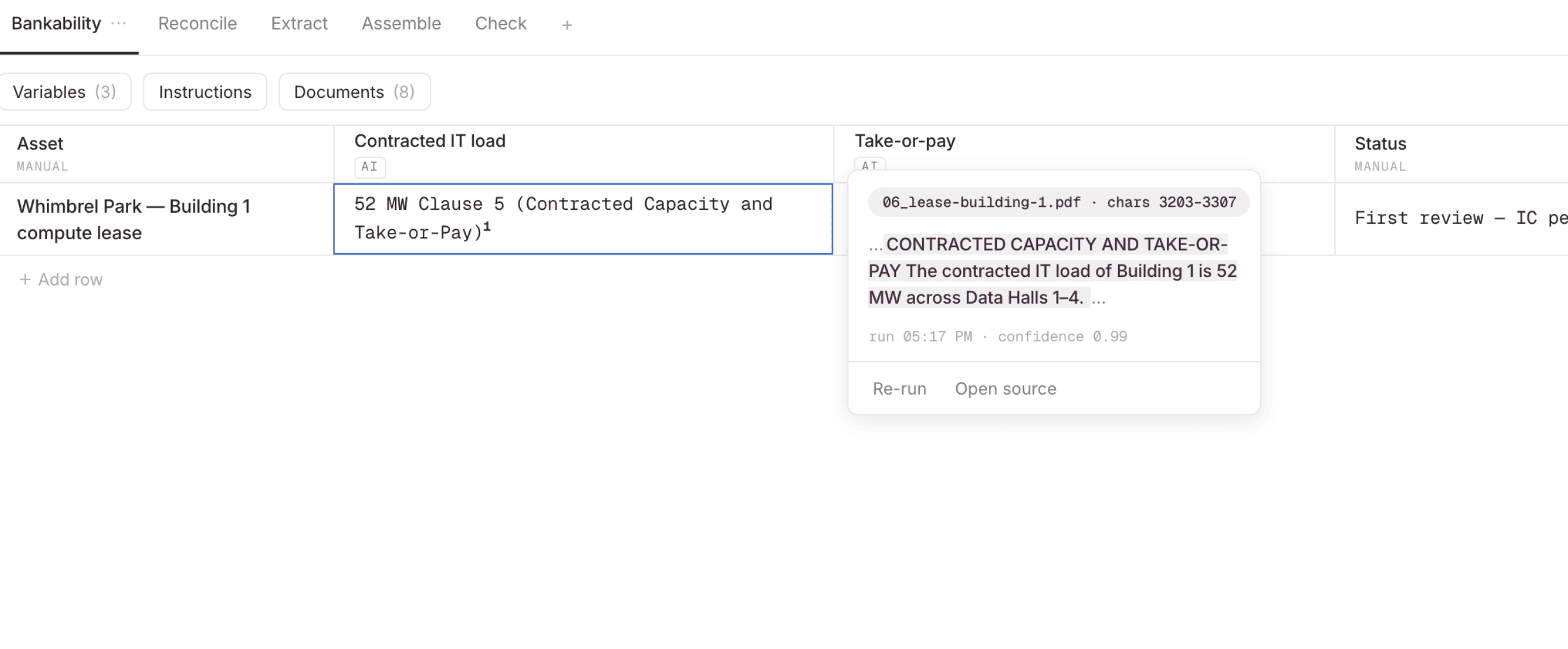
Open any AI value and see the exact span it came from, highlighted in the source document. Where the documents are silent, the cell says so — an abstention is an answer, not a blank.
Columns reference columns
Cells reference each other with @, forming a dependency graph — change an input and everything downstream re-runs. That graph is what lets the sheet check itself.
Fig. 4.1 — the dependency graph: two cited inputs, one computed verdict
The sheet checks itself
The same figure is checked everywhere it appears — model, diligence pack, memo. On our sample deal, the workbook catches a guarantor stated at £2.6bn in one document and £260m in another.
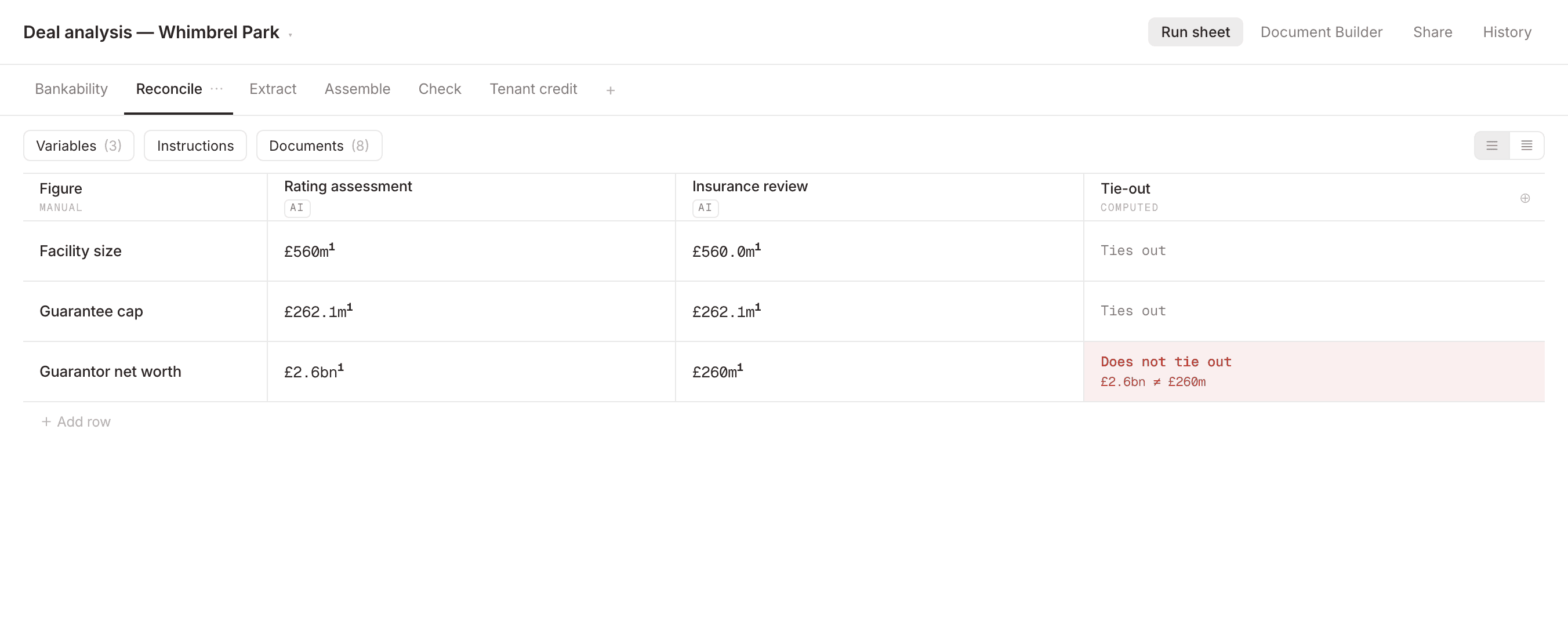
Fig. 4.2 — the guarantor break, computed live · £2.6bn ≠ £260m
From sheet to deliverable
A finished workbook drafts the memo — and saves as a workflow the team runs on the next deal. One project workspace holds the sheets, the deal’s documents, and the live data sources in a single checked record.
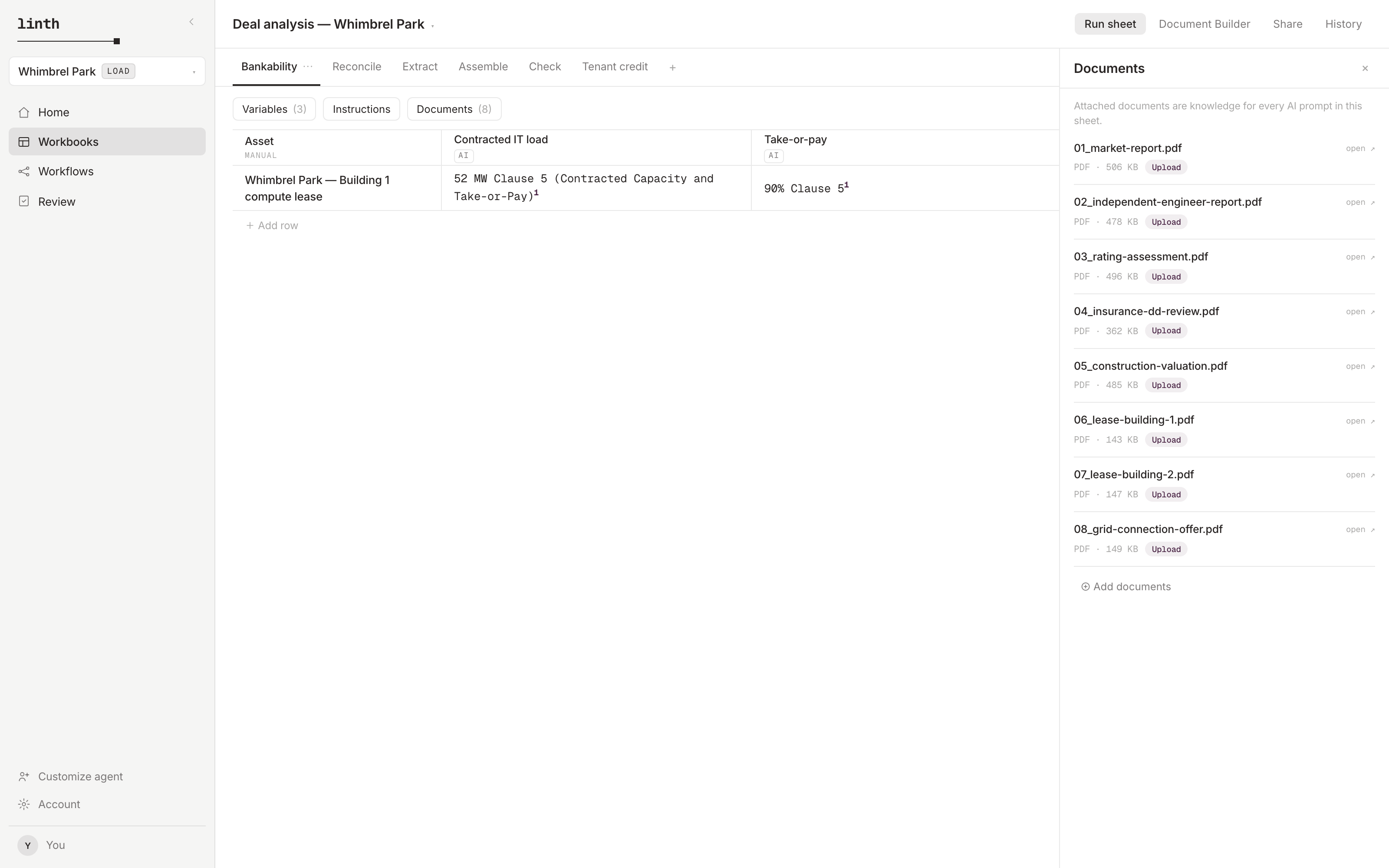
The workbook in its project — sheets, documents, and sources in one record